
What Does Website Speed Optimization for Roaming Data Mean?
Website speed optimization for tourists on roaming data means designing and optimizing websites so they load quickly, use minimal mobile data, and remain fully functional for travelers accessing them through international roaming or slow mobile networks.
Why This Matters Globally
In 2025, most travelers rely on mobile phones with roaming data while booking hotels, tours, rentals, and restaurants. For destinations, cities, islands, and tourism brands worldwide, slow-loading websites lead to drop-offs, lost bookings, and poor brand trust—making mobile performance a critical competitive advantage.
Websites optimized for roaming data load faster, consume less mobile data, rank better on Google, and convert more international travelers.
Why Is Website Speed Critical for Tourists Using Roaming Data?
Website speed directly affects whether a traveler stays, books, or abandons your site.
-
- Roaming connections are slower and less stable
-
- International data plans have limited bandwidth
-
- Travelers often browse on the move
-
- Slow pages increase bounce rates
-
- Google prioritizes fast mobile experiences
-
- Faster sites improve booking confidence
Even a 1–2 second delay can cost tourism businesses significant conversions.
How Do Slow Websites Impact Tourist Bookings?
Slow websites break trust during high-intent moments.
-
- Users abandon booking forms
-
- Maps and galleries fail to load
-
- Payment pages time out
-
- Calls-to-action go unseen
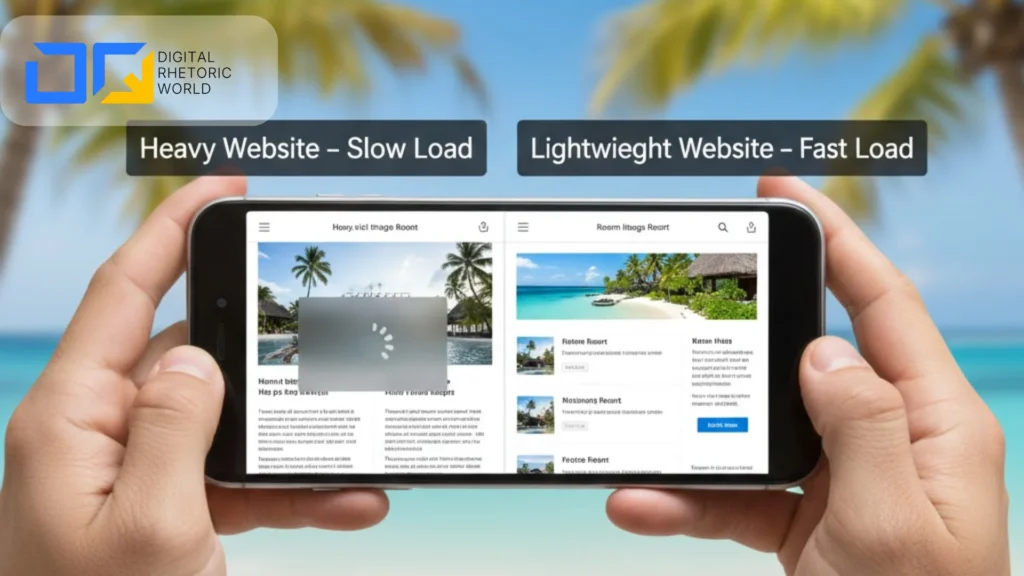
How Can You Optimize a Website for Travelers on Roaming Data?
Optimizing a website for roaming users focuses on speed, simplicity, and efficiency.
-
- Reduce page weight aggressively
-
- Prioritize mobile-first design
-
- Load critical content first
-
- Eliminate unnecessary scripts
-
- Use lightweight frameworks
-
- Optimize server response times
This approach helps optimize websites for travelers on roaming data without compromising usability.
What Is an Ideal Page Size for Travel Websites?
Smaller pages perform better on international networks.
-
- Aim for under 2 MB per page
-
- Keep above-the-fold content minimal
-
- Limit heavy animations
-
- Avoid auto-playing videos
What Are the Best Image Optimization Techniques for Slow Roaming Connections?
Images are the biggest cause of slow mobile websites.
-
- Use next-gen formats like WebP and AVIF
-
- Compress images without visible quality loss
-
- Serve responsive images by screen size
-
- Lazy-load images below the fold
-
- Remove decorative images that add no value
Best image optimization for slow roaming connections ensures galleries remain attractive yet fast.
Should Travel Websites Use Image Sliders?
Image sliders often hurt performance.
-
- Load multiple images at once
-
- Increase data usage
-
- Reduce page speed scores
-
- Delay content visibility
Static hero images usually convert better and load faster.

How Can You Reduce Mobile Data Usage on Travel Websites?
Reducing data usage improves accessibility and engagement.
-
- Minimize JavaScript execution
-
- Combine and compress CSS files
-
- Enable browser caching
-
- Use lightweight fonts
-
- Remove third-party trackers
-
- Avoid heavy embeds
Learning how to reduce mobile data usage on travel websites helps serve travelers across all regions.
Do Fonts Affect Mobile Data Consumption?
Yes—custom fonts increase load size.
-
- Limit font families
-
- Use system fonts where possible
-
- Avoid multiple font weights
-
- Preload essential fonts only
How Does Mobile Web Performance Impact SEO in 2025?
Mobile speed is now a core ranking factor.
-
- Google uses mobile-first indexing
-
- Core Web Vitals affect rankings
-
- Slow sites lose visibility
-
- Faster pages earn better engagement signals
-
- Speed impacts AI-powered search summaries
Strong mobile web performance for international tourism 2025 improves both discoverability and conversions.
Which Core Web Vitals Matter Most for Travelers?
Tourism websites should focus on:
-
- Largest Contentful Paint (LCP)
-
- Interaction to Next Paint (INP)
-
- Cumulative Layout Shift (CLS)
How Location and Hosting Affect Roaming Performance
Server location plays a major role in global loading speed.
-
- Use global CDNs (Content Delivery Networks)
-
- Serve content from nearest geographic nodes
-
- Optimize DNS resolution
-
- Choose fast, scalable hosting
For islands, destinations, and remote regions, CDNs significantly improve roaming performance.

How Website Speed Optimization Applies Across Destinations
The same principles apply globally.
-
- Tourists in Europe, Asia, the Caribbean, or the Middle East face roaming limitations
-
- Island destinations often experience slower networks
-
- Remote travel regions rely heavily on mobile browsing
-
- Speed consistency builds trust across borders
Fast websites perform better regardless of location.
Local Insights & Examples from Tourism Websites
Tour operators, hotels, and restaurants that optimize for roaming data consistently see higher engagement from international visitors.
For example, tour websites that replace heavy galleries with compressed images and remove autoplay videos experience faster load times and higher inquiry rates. Restaurants that simplify menus and reduce scripts make it easier for travelers to decide quickly while walking or commuting.
Accommodation websites that prioritize booking forms over animations convert better on roaming networks. In contrast, sites built only for desktop or high-speed Wi-Fi struggle to retain mobile tourists.
Conclusion
Improving website speed for tourists browsing on roaming data requires lighter pages, optimized images, reduced scripts, and mobile-first design. In a global travel environment, fast-loading websites rank higher, use less data, and convert more visitors into bookings.
If your tourism website serves international travelers, optimizing for roaming data isn’t optional—it’s essential for growth.